
Interior Styling, Interior Design, or Renovation — Which One Does Your Home Actually Need?
If you’ve ever typed “how do I make my home look better” into Google, you’ve probably landed on a flood of conflicting advice — and three different types of professionals, each claiming to do something slightly different.
Interior stylist. Interior designer. Builder. Renovator. In Sydney, as anywhere, the terms get used interchangeably, the pricing varies wildly, and most homeowners give up trying to understand the difference. They either do nothing, or hire the wrong person for the wrong job.
The clearest way to cut through the confusion is to ask one question: What layer of the home are you actually working on?
Layer One: The Bones — Structural Renovation
This is the most fundamental layer. It includes the floor plan and room layout, load-bearing walls, plumbing and electrical placement, and kitchen and bathroom configurations.
When this layer needs to change, you’re looking at structural renovation — a builder, possibly a structural engineer or architect, council approvals, and potentially months of construction.
You need this when: The layout is genuinely dysfunctional. Rooms are the wrong size for how you live. A wall blocks essential light or circulation. The kitchen or bathroom cannot serve its purpose in its current configuration.
You probably don’t need this when: The space feels wrong, but you can’t quite articulate why. The layout works fine — it just doesn’t feel like you. That second scenario is far more common than the first.
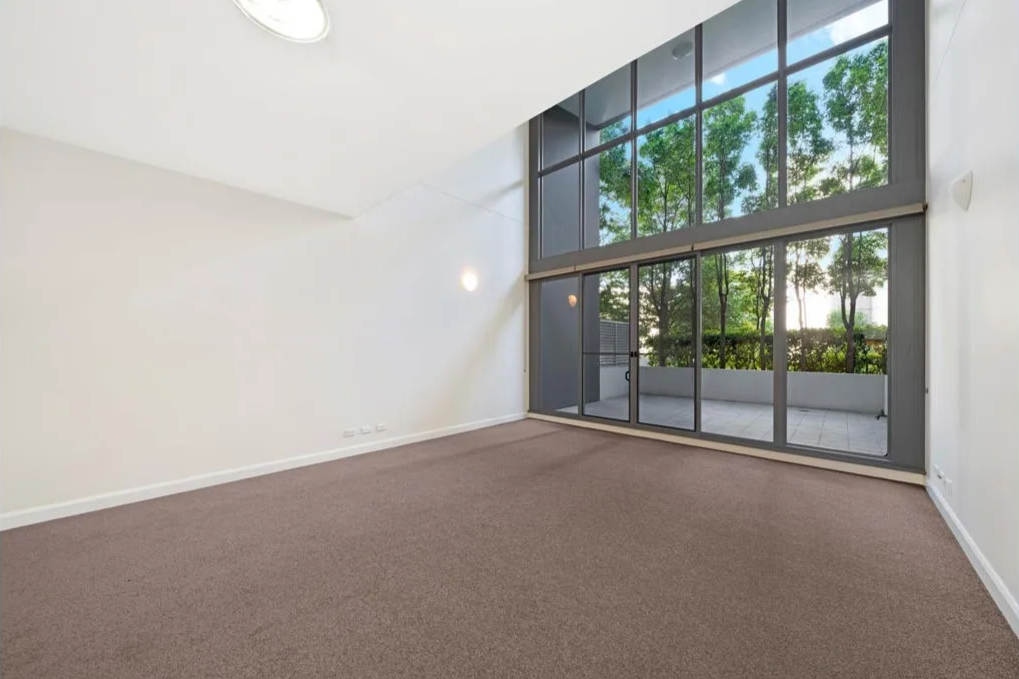
Before — empty living room
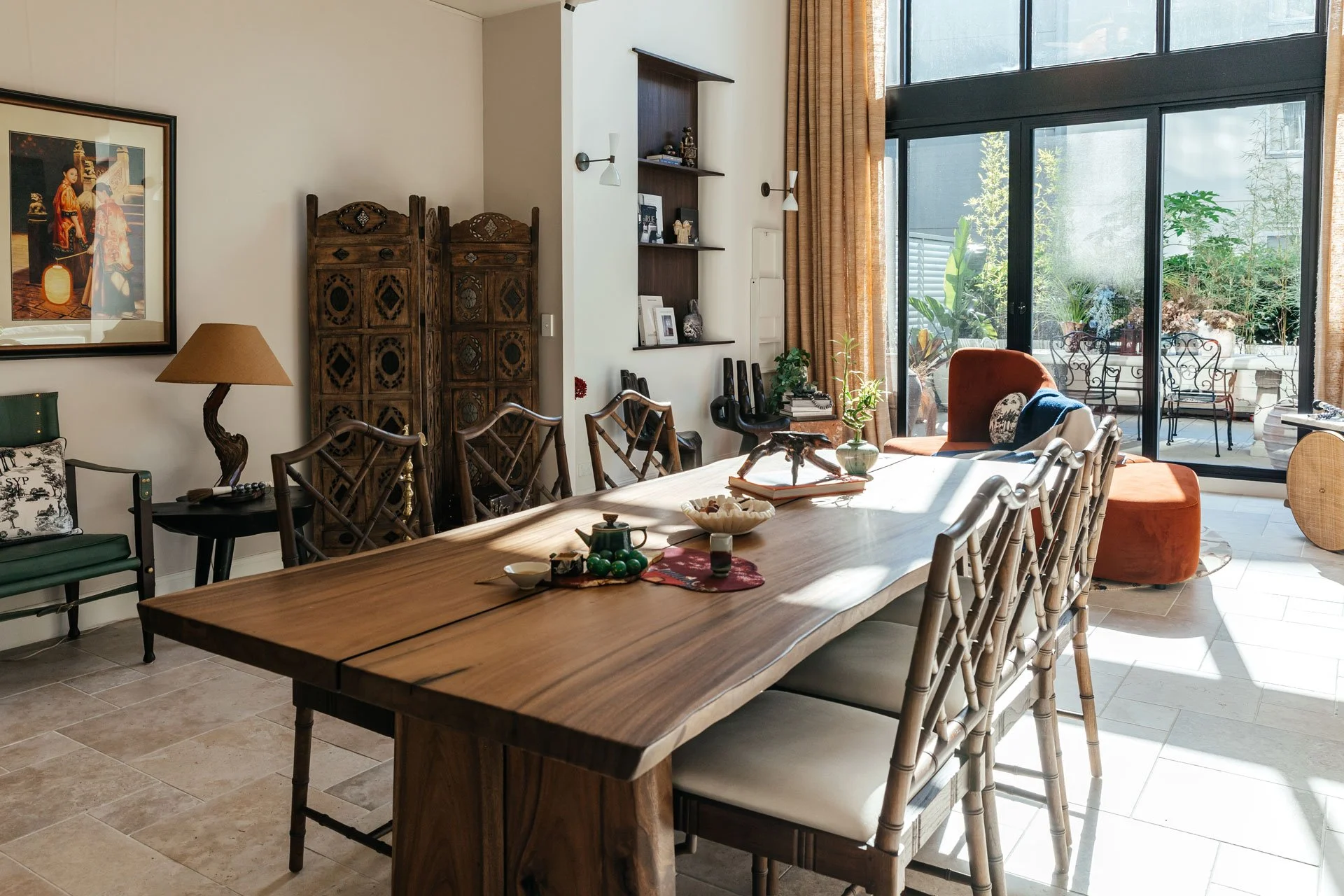
After — Surface Renovation + Styling, Heritage Harmony, SYP Homes
Layer Two: The Skin — Surface Renovation
Above the structural layer sits the surface layer: flooring, paint colours, fixed cabinetry, tiling. Changing this doesn’t require a structural engineer, but it does involve trades — tilers, painters, cabinet makers, flooring installers.
Interior designers typically work across this layer and the structural layer. Their role is to make decisions about the architecture and finish of a space — specifying materials, planning layouts, and coordinating a project from brief to completion.
You need this when: Your finishes are genuinely outdated or worn. The flooring is damaged or mismatched. Fixed elements need replacing or reconfiguring.
You probably don’t need this when: Everything functions. The finishes are acceptable, or even good. But the space still feels flat, incomplete, or not quite like home. Again — far more common than people realise.
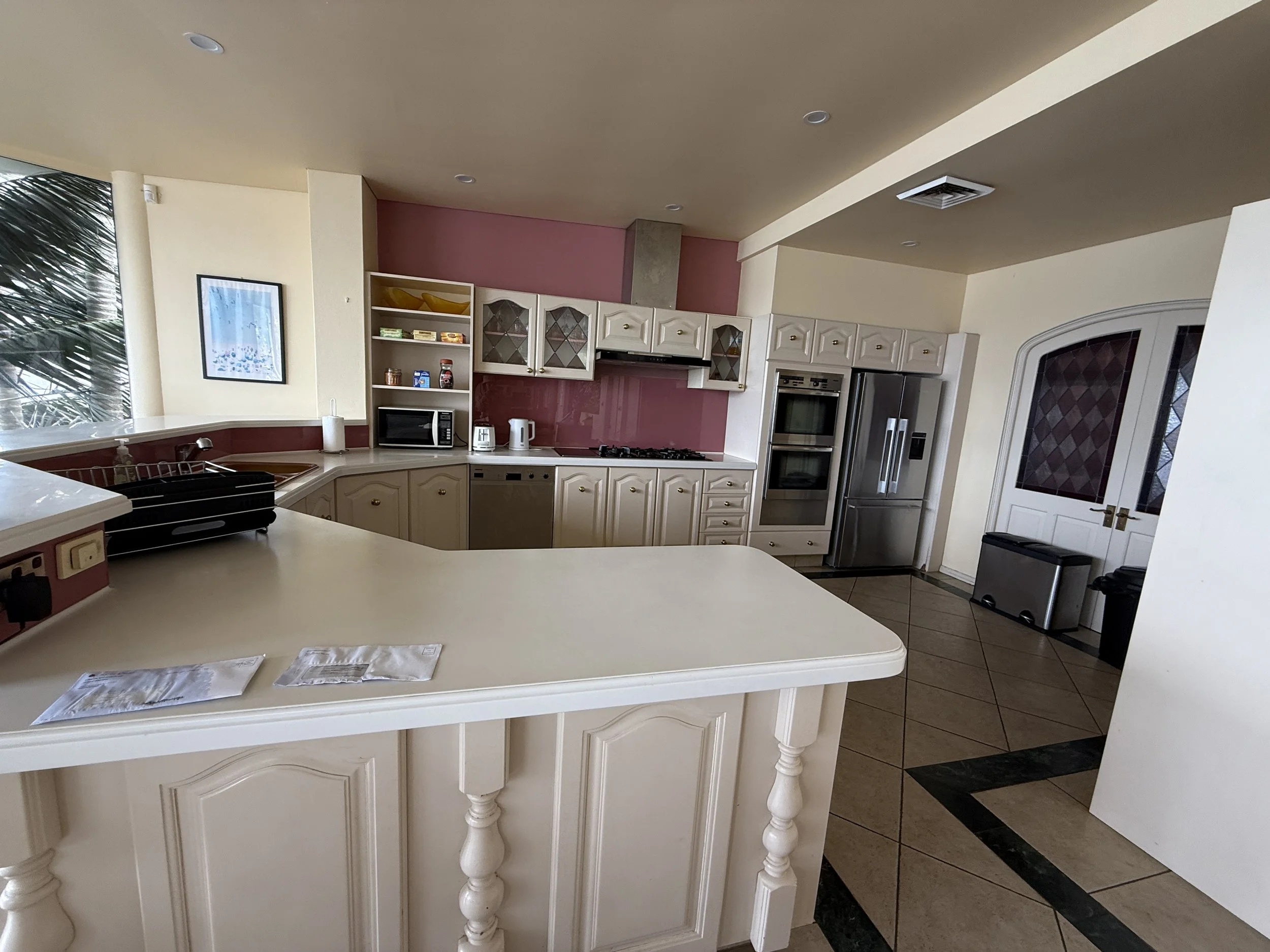
Before — kitchen
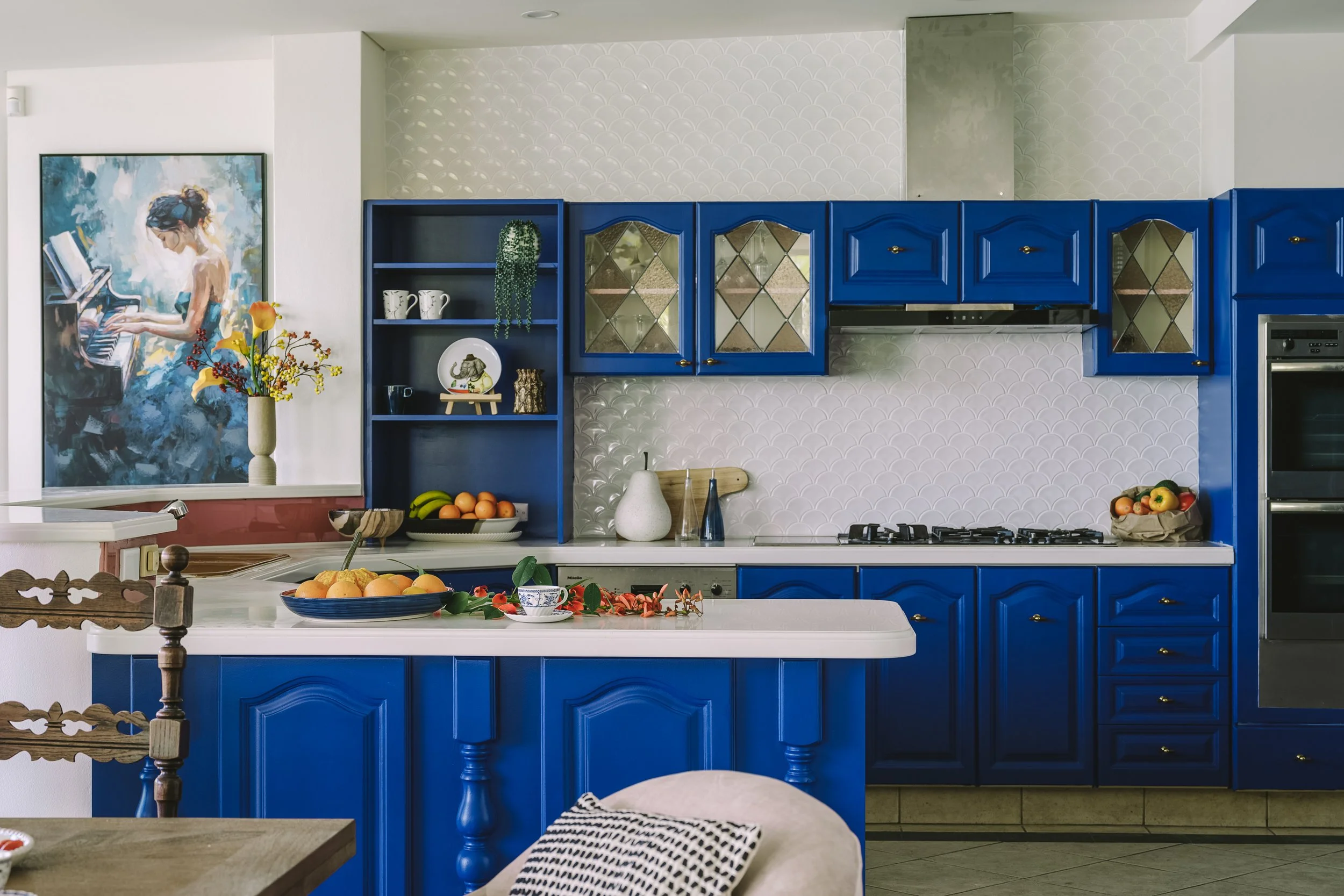
After — Surface Renovation + Styling, Sunlit Renewal, SYP Homes
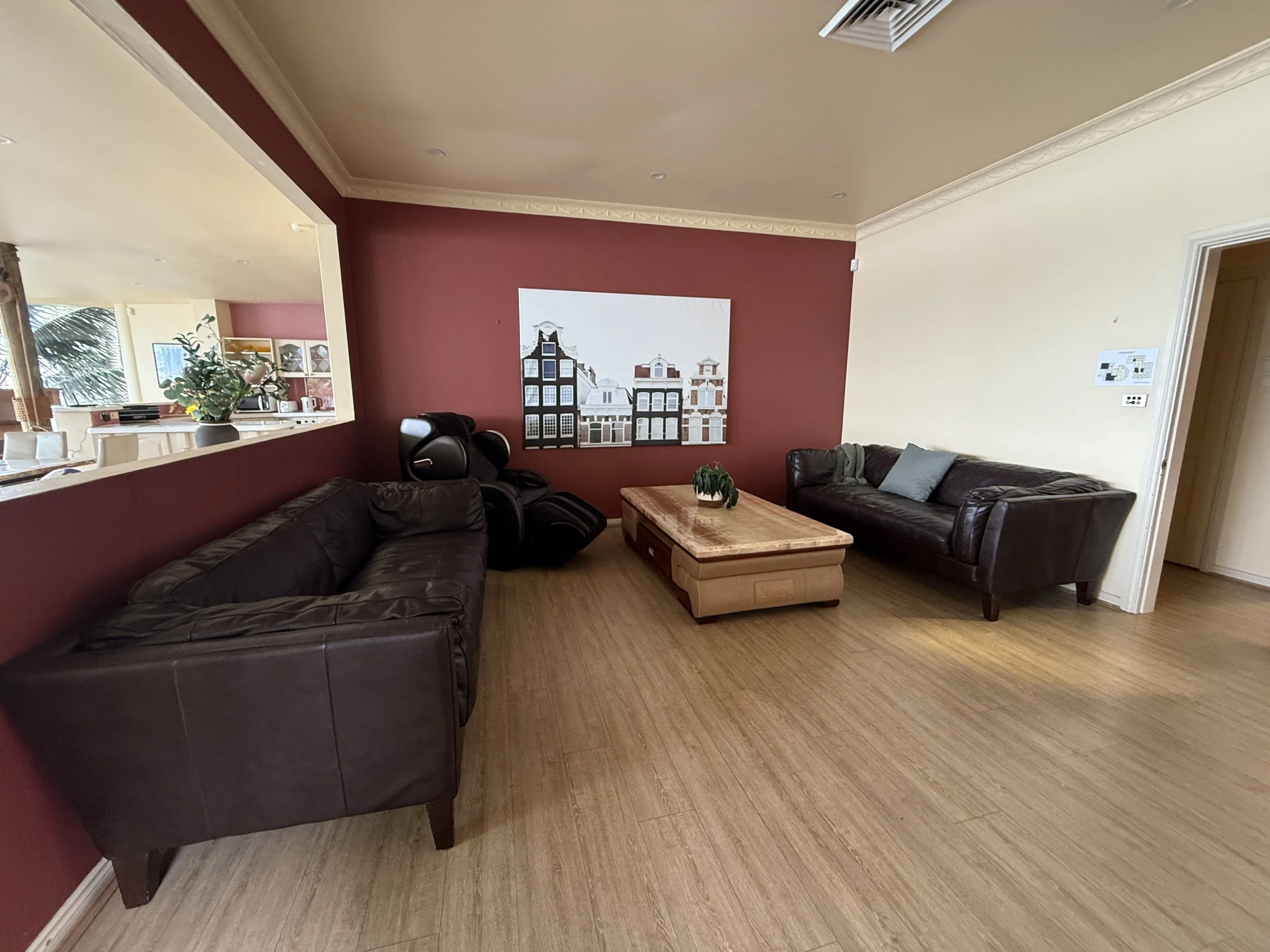
Before — living room
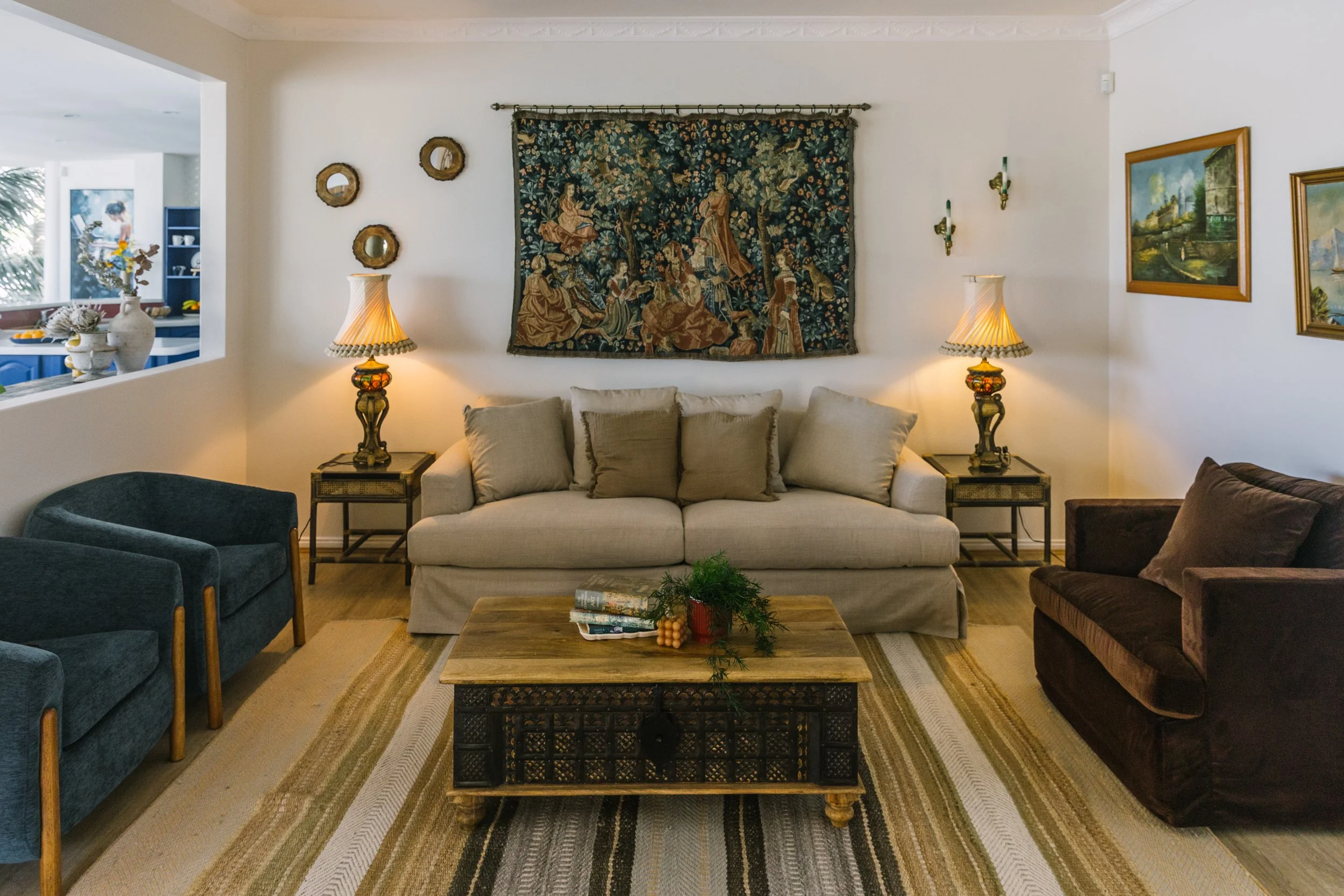
After — Surface Renovation + Styling, Sunlit Renewal, SYP Homes
Layer Three: The Atmosphere — Interior Styling
This is the layer most homeowners have the least vocabulary for — which is precisely why it gets overlooked, misunderstood, and undervalued.
Interior styling works with everything that isn’t fixed: furniture, textiles, lighting, objects, artwork. More specifically, it works with how these elements relate to each other in terms of scale, proportion, material, colour, and visual weight.
What styling actually does is establish the composition of a space — the invisible architecture of how a room is experienced.
This is why two rooms with identical layouts and the same quality of finishes can feel completely different. One feels resolved, considered, and alive. The other feels flat, disconnected, and somehow unfinished. The difference is almost never the walls or the floors. It is the composition.
You need this when: Your home is functional and the finishes are fine, but it lacks identity, cohesion, or atmosphere. You’ve bought furniture you like individually, but together it doesn’t quite work. Nothing is technically wrong, but nothing feels intentional.
This is the work that lives in the gap between “I like the bones of this place” and “it finally feels like home.”
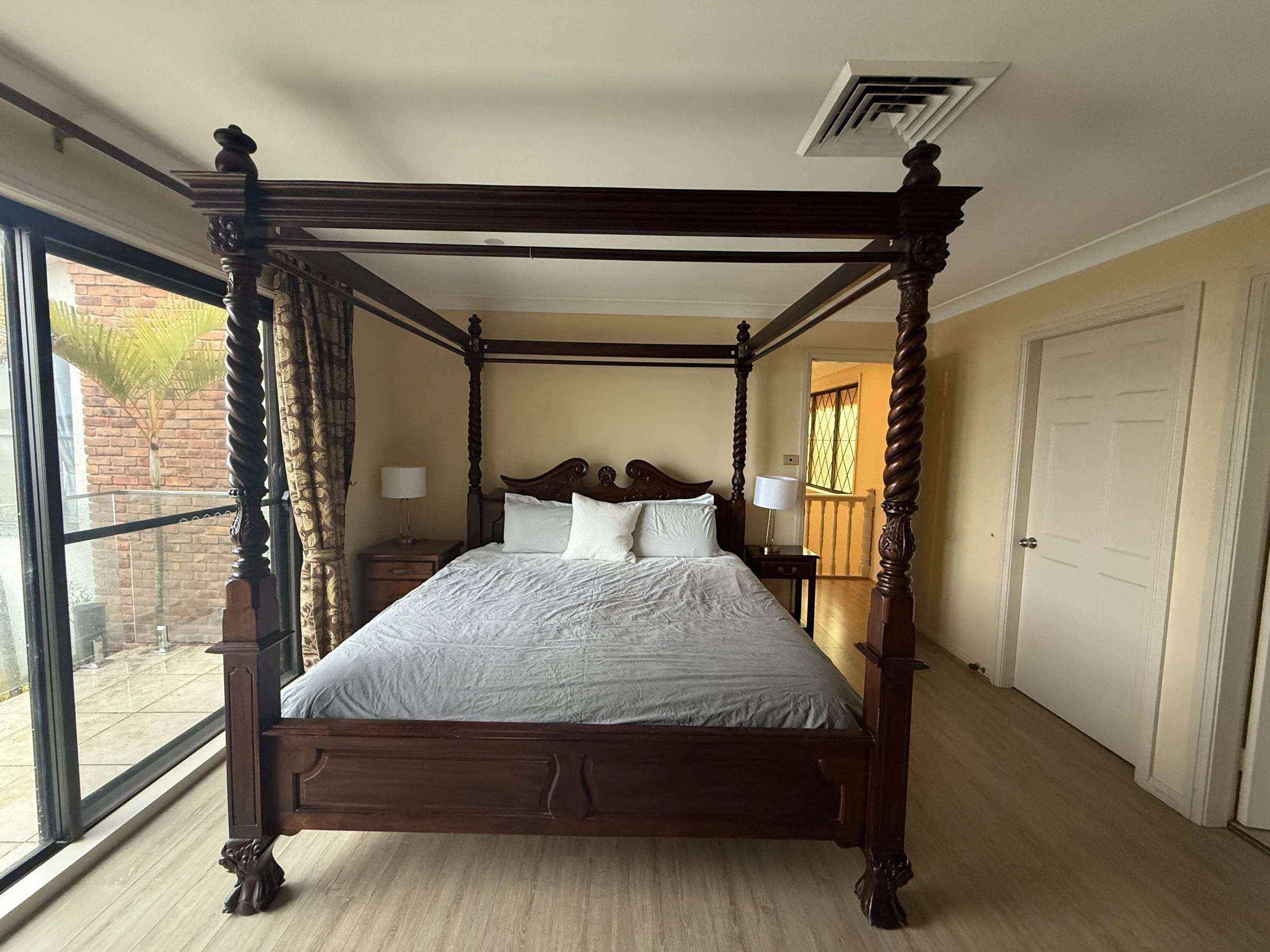
Before — bedroom 1
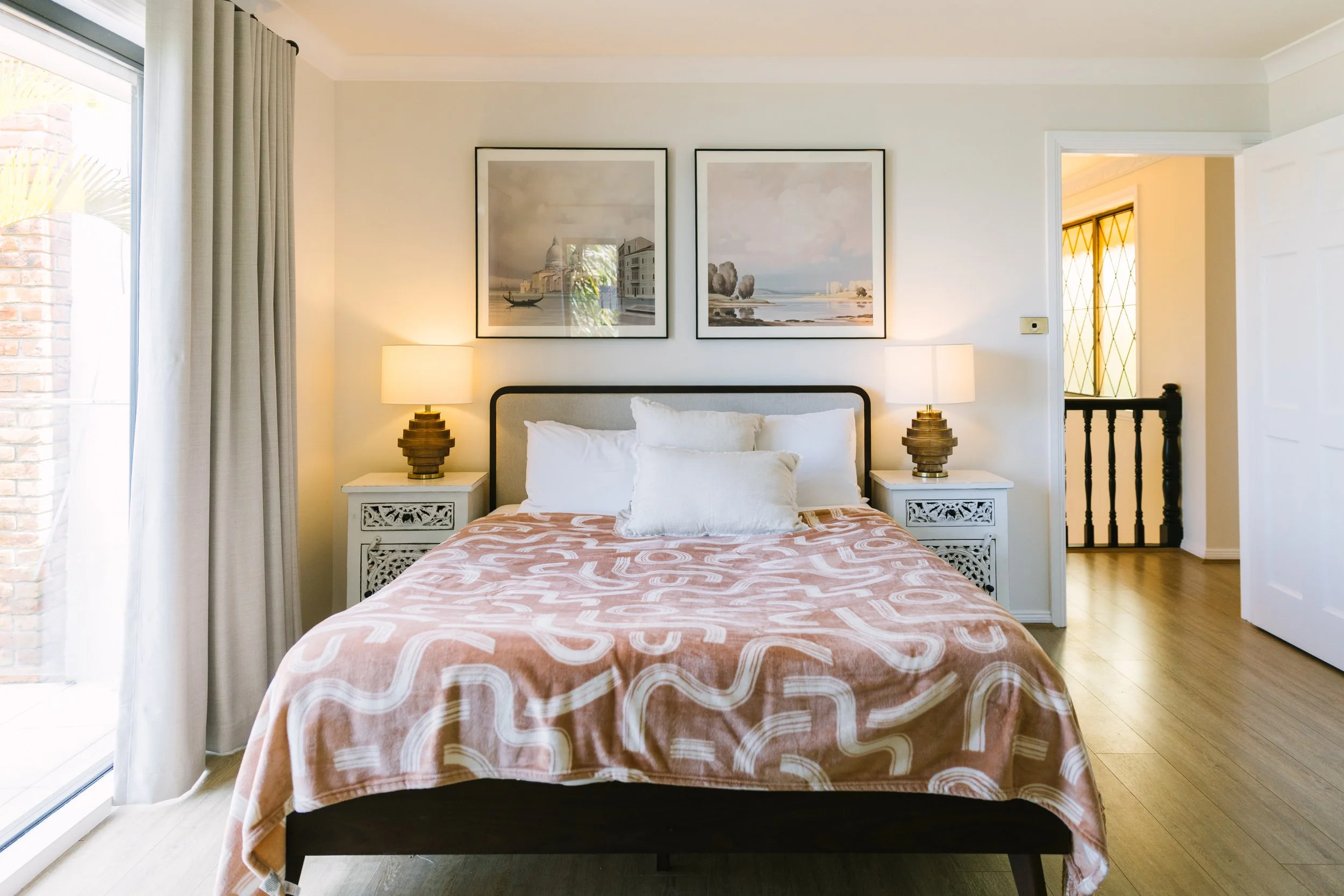
After — Surface Renovation + Styling, Sunlit Renewal, SYP Homes
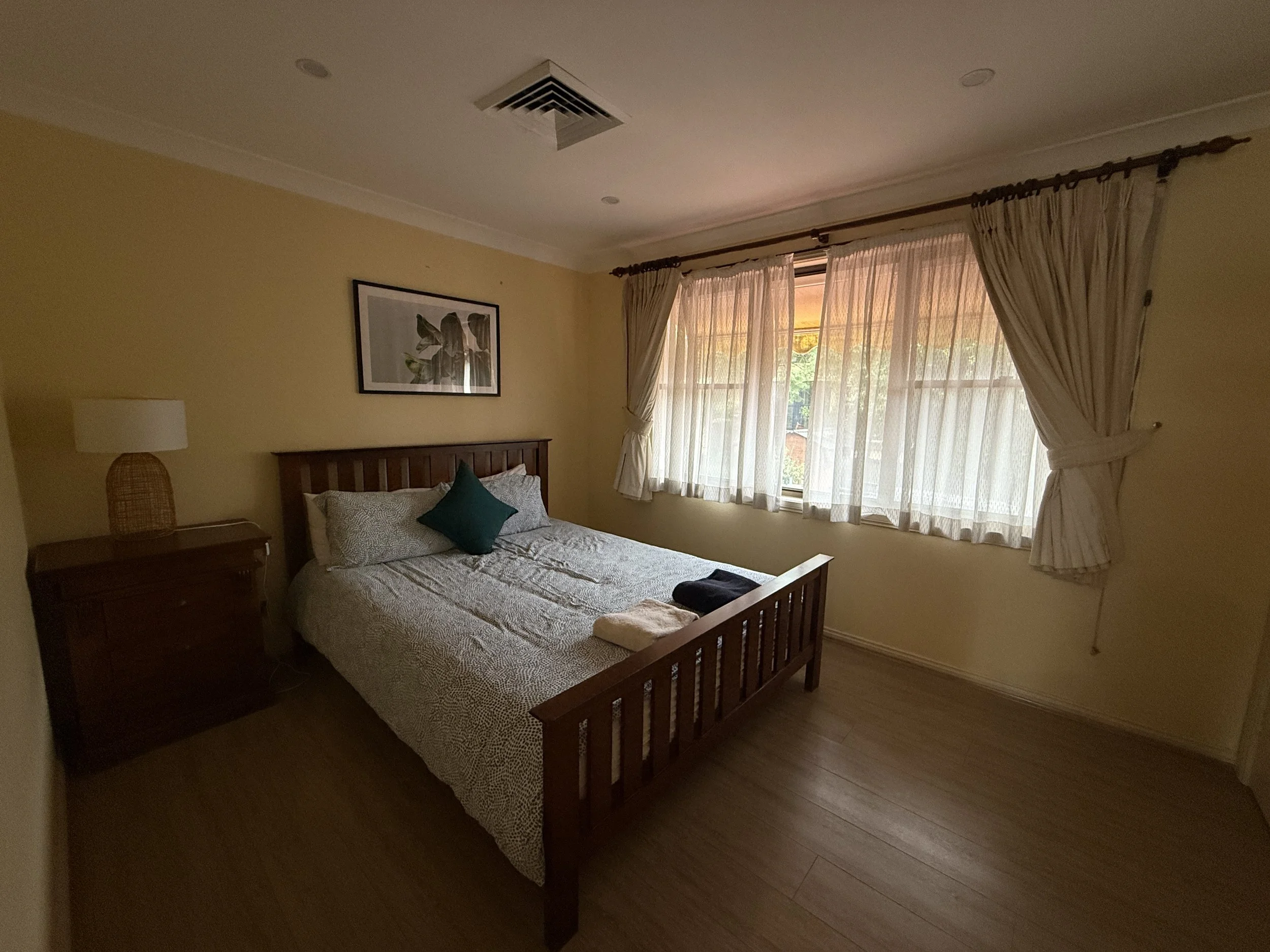
Before — bedroom 2
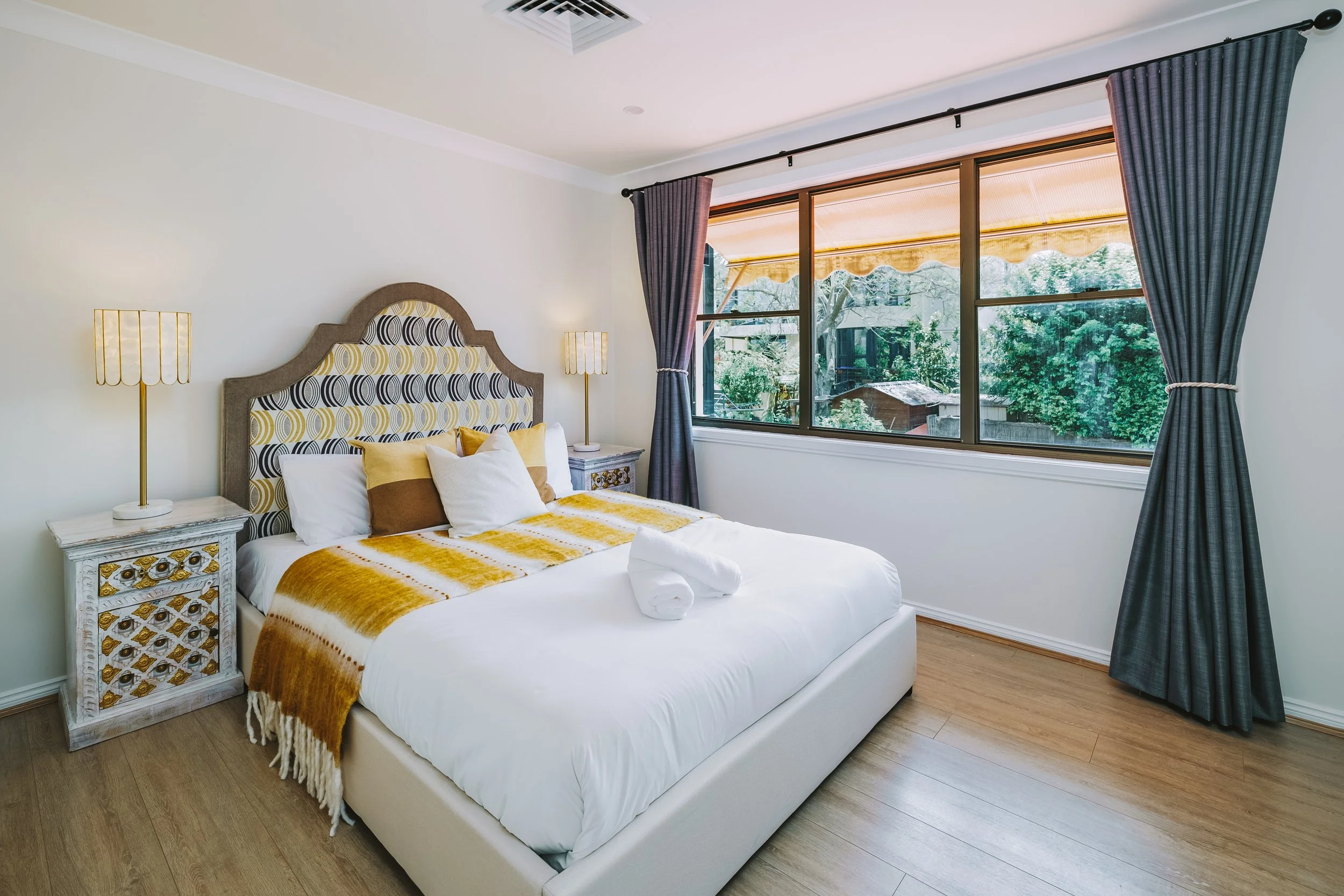
After — Surface Renovation + Styling, Sunlit Renewal, SYP Homes
As we explored in our previous article, most homes don’t have a structural problem — they have a composition problem. Understanding which layer needs attention is the first step to solving it.
A Simple Way to Think About It
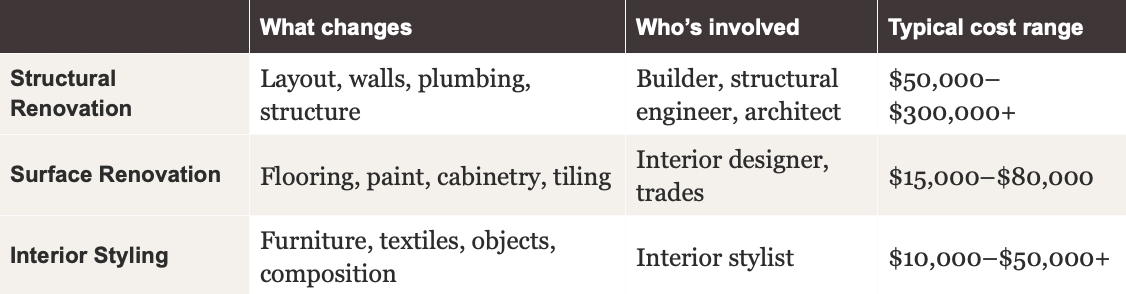
These three types of work are not in competition — they address different problems and can overlap. The most important thing to understand is this: you don’t need a higher layer to fix a problem that exists in a lower one. If your home has a composition problem, renovation won’t solve it. If your space needs its atmosphere rebuilt, you don’t need a builder — you need someone who understands how to compose a room.
How to Know Which One You Need
Is there something structurally dysfunctional about your home? Rooms that don’t work for their purpose, a layout you simply cannot live with? → You may need structural renovation. Engage a builder or architect.
Are the surfaces so outdated or worn that they undermine everything else? Damaged flooring, paint that kills the light, fixed elements that genuinely need replacing? → Surface renovation may be appropriate. Consider bringing in a designer before committing to any materials, so your finish decisions and future styling work as one.
Does your home function well and the surfaces are acceptable — but it still doesn’t feel right? Cohesive but characterless? Incomplete, flat, or somehow not yours? → This is almost certainly a composition problem. Interior styling is what you need.
Styling Is Not a Lesser Option
Styling is not a lesser option. It is not what you do when you can’t afford to renovate. It is a distinct discipline — one that addresses a layer of the home that renovation literally cannot touch.
Some of the most extraordinary homes have nothing structurally remarkable about them. Standard layouts. Neutral finishes. But the composition is so considered — the proportions, the materials, the light, the objects — that the space feels genuinely alive.
That quality does not come from demolition. It comes from understanding.