
A home comes together through decisions that belong to one another. The furniture needs to suit the room, the room needs to support everyday life, and the things you value need a place within it.
That can be difficult to see when you are choosing one piece at a time. A sofa may be beautiful, yet leave too little room to move. A palette may look convincing on a moodboard, yet feel different in your evening light. Something you have owned for years may matter more than anything on your shopping list.
At SYP Homes, these eight principles help us connect those decisions. They begin with the people who live in a home and the things they want to keep, then consider how layout, colour, materials and light can work together. They are a framework to revisit as a project develops, with room for different tastes and practical needs.
1. Start With How You Live
Before choosing a style, consider what makes you comfortable. Do you enjoy seeing books and collected objects around you? Do clear surfaces help you unwind? Does your living room need to accommodate visiting family, a quiet evening, or both?
Our Space DNA questionnaire offers a starting point for these conversations. It explores your relationship with belongings, order, beauty and change; people with similar results can still prefer very different interiors.
In Living Palette, a Barangaroo apartment, the owner's enthusiasm for art and colour informed an expressive mix of sculptural furniture, vintage pieces and playful details. That direction grew from the person living there.
A useful starting point is to describe an ordinary day at home: where belongings accumulate, where people gather, and where you would like more comfort or ease. Those details give a design direction something real to respond to.
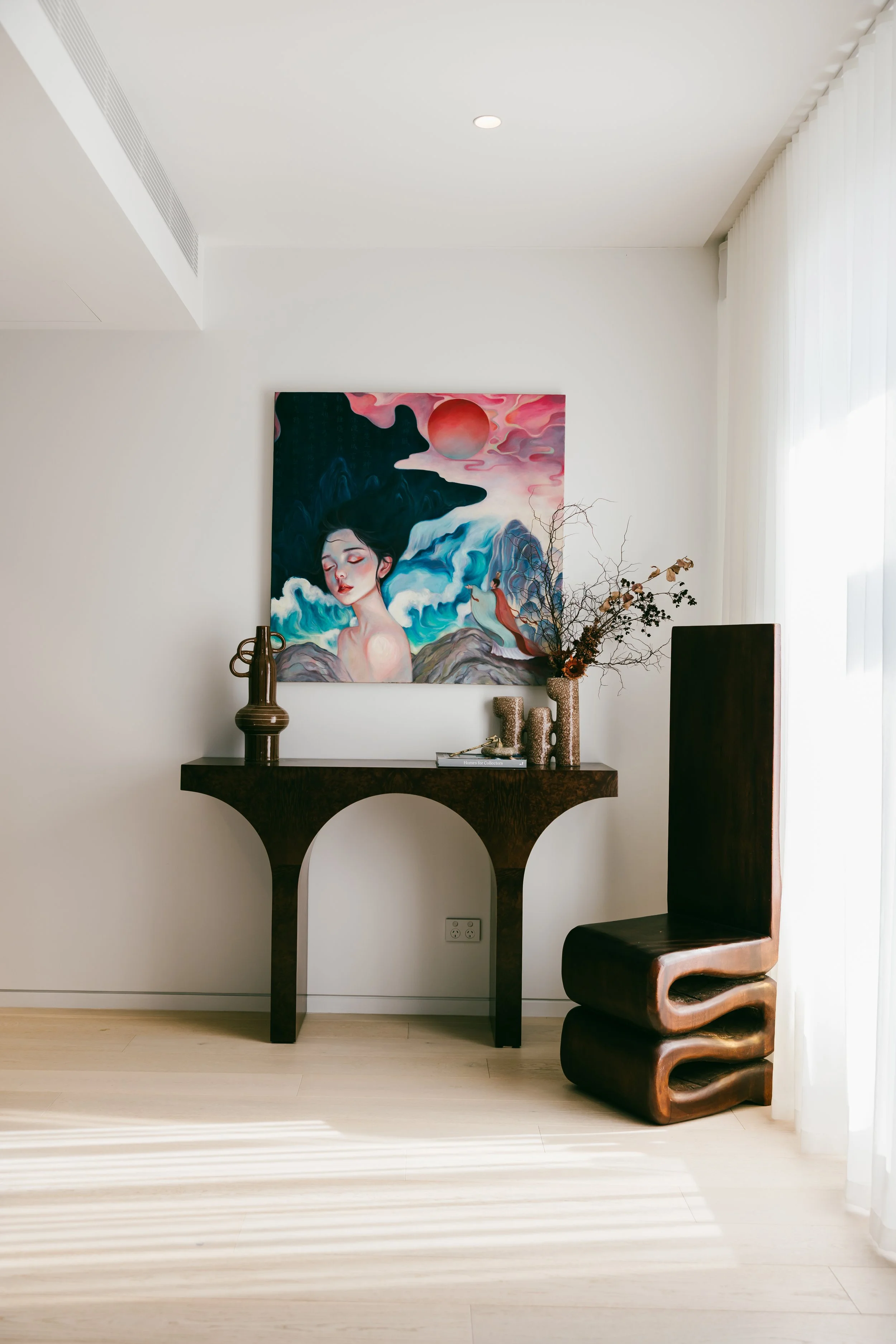


2. Make Room for What Matters
Some of the most useful starting points are already in your home. A familiar chair, an artwork or a collection of books can help establish what the next version of the space should include.
Bring these pieces into the conversation early. Consider their dimensions, how you use them and what you enjoy about them. A painting might inform a palette; a well-used cabinet might influence the layout. Personal significance can be part of a practical design brief.
Heritage Harmony, founder Sophia Yue's own home and studio project, explores the connection between her Chinese heritage and life in Sydney. Blue-and-white porcelain, aged timber and a palette drawn from traditional Chinese colours contribute to its personal expression.
Your own references may be quieter or more varied. What matters is deciding what deserves a continuing place in your home, before new purchases begin to fill it.


3. Get the Layout and Proportions Right
Once you know what the room needs to do and what it should accommodate, consider the arrangement. Furniture size and placement depend on doorways, windows, neighbouring pieces and the space people need to move.
Before ordering, mark the footprint on the floor. Open nearby cupboard doors, pull out dining chairs and walk the route you use while carrying something. Check delivery access as well as the final position. Note natural light, power points and likely lamp positions at this stage too.
Then consider how the pieces work together. Can you reach the coffee table comfortably? Does the rug connect the seating arrangement? Does a tall cabinet overwhelm the furniture beside it, or provide a useful contrast?
Photographs help you notice visual relationships, but measurements and everyday movements test whether the arrangement will work. Both deserve attention before a purchase.
4. Give the Room a Clear Visual Focus
With the layout taking shape, consider where you want attention to settle. An artwork, a fireplace, a view or a distinctive piece of furniture can give the room a focal point. The surrounding elements help it sit comfortably within the whole.
Think in terms of emphasis: which surfaces form the background, which pieces draw the eye, and which details connect them? Colour, scale, texture and empty space can all establish those relationships. A colourful interior can be just as clearly composed as a quiet one.
An open-plan home may have several focal points across different zones. Look at them from your usual seats and walking routes; a dining pendant and living-room artwork do not need equal attention from every angle.
If the room feels busy, try moving an accessory or simplifying a surface. Give the pieces you most want to enjoy enough space to be noticed.
5. Build a Connected Colour Palette
Start with the colours already present in flooring, joinery, stone, views and belongings you intend to keep. These give new selections something to respond to.
At Muted Resonance in Bellevue Hill, deep blue was already part of the architecture. We carried that colour into textiles, glass and furnishings, extending the home's existing language. Artworks by local artists added further warmth and variation.
Repetition can help a palette feel connected without making every room identical. A colour might appear broadly in one space and as a smaller detail elsewhere.
Test samples in the actual room, at different times of day. Notice how much space each colour occupies and whether the balance feels right alongside your furniture and finishes.

6. Layer Materials With Purpose
Materials add depth through their relationships: smooth against textured, polished beside matt, soft alongside more structured forms. Their effect depends on the amount used and the light falling across them.
In Timeless Layers, green velvet, carved rosewood, marble and vintage chinoiserie screens contribute to a layered interior combining classical forms, contemporary elements and Eastern details.
Quiet Revival, a Bowral homestead, takes a different approach. Weathered textures and foliage form part of a direction shaped by the property's setting and character. Both projects show how materials can support a distinct atmosphere.
When choosing finishes, lay samples together in the room. Consider their tone, texture and sheen, alongside how they will be used and maintained. Warmth is not tied to one material: stone can read warm, and timber can read cool.
If a room feels flat, identify what is missing before adding more. A woven texture might soften a predominantly smooth arrangement; a quieter finish may give a busy composition room to breathe.

7. Consider Light Throughout the Day
Light deserves attention from the beginning, when you assess the room and plan furniture positions. Return to it as colours and materials take shape: their appearance will change between daylight and the lamps you use at night.
Think about the activities lighting needs to support. General lighting helps you navigate, task lighting supports reading or working, and accent lighting draws attention to selected features. One fitting may serve more than one purpose; useful combinations matter more than a fixed number of lamps.
Test the room at the time you use it most. Can you read comfortably? Does a light create glare from your usual seat? Would a separately switched lamp or dimmer give you a better evening setting?
Consider brightness, shade design, placement and colour temperature together. The aim is a room that supports both its daytime uses and the way you want to settle into it after dark.
8. Buy With a Clear Plan
Before committing to purchases, bring the decisions together in a simple plan: what stays, where the main pieces go, the palette, essential lighting and storage, and how the budget will be allocated.
The purchase order will vary. A sofa may need to be resolved early because of its size; an existing artwork may establish the colour direction; essential storage may take priority over both. Availability and delivery timing can also affect the sequence.
Check each proposed purchase against the whole room. Do you know where it will go, how it will be used and what it needs to work alongside? If a selection changes, revisit the related decisions before ordering.
For more on measuring, fixed finishes and furnishing decisions, see our guide to furnishing an apartment in Sydney. Apply its suggestions to your own layout and household needs.
Bring the Decisions Together
Begin with one room. Identify what already works, what you want to keep and which change would make everyday life easier. A clear starting point can make the next decisions more manageable.
If you are unsure whether the difficulty lies in the layout, finishes or furnishings, our article on why your home feels off explores those different possibilities.
A Bespoke Consultation brings your household's needs, Space DNA results, existing surroundings, preferences and budget into one conversation. It establishes a personal design direction before the detailed selections begin.