How to Furnish an Apartment in Sydney — A Practical Guide
Furnishing a Sydney apartment is one of those things that looks straightforward until you’re standing in an empty room wondering why nothing you’ve bought feels quite right.
Most people approach it the same way: start with the sofa, add a dining table, find a bed, fill in the gaps. A few months later, the apartment is technically furnished — but it doesn’t feel like a home. Something is off, and it’s hard to name what.
After years of styling apartments across Sydney, I can tell you what that something usually is. And more importantly, how to avoid it from the start.
This guide covers the practical process of furnishing a Sydney apartment — in the right order, with the decisions that actually matter.
Before You Buy Anything: Understand Your Apartment First
The most expensive furnishing mistakes happen before a single item is purchased. They happen when someone buys a sofa they love in the showroom, brings it home, and discovers it blocks the hallway. Or buys a dining table that’s technically the right size but makes the room feel cramped because the proportions are wrong.
The fix is simple, but most people skip it: understand your apartment before you start shopping.
Measure everything.
Not just the rooms — the doorways, the hallways, the lift dimensions if you’re above ground floor. A sofa that won’t fit through the front door has happened to more people than you’d think.
Map your natural light.
Which direction does the apartment face? North-facing apartments have warm, generous light through winter. East-facing are bright in the morning and dim by afternoon. South-facing are cool and consistent. This matters because every material decision you make — the colour of your walls, the finish of your furniture, the weight of your textiles — reads differently depending on your light.
Identify the fixed elements.
Flooring, cabinetry, any built-in joinery — these are your starting point, not your obstacle. Build your palette around what’s already there, rather than fighting it.
Mark the circulation paths.
Where do you walk when you come through the front door? Where do you move between the kitchen and the living area? Main walkways need at least 75cm of clear space, ideally 90cm. These paths determine where your large furniture can and can’t go — before you fall in love with a piece that doesn’t fit.
The Order That Actually Works
Most people furnish in the wrong order — they start with what’s most visible (the sofa, the dining table) and work outward. The problem is that those visible pieces are the hardest to get right without a framework to guide them.
The order that works is this:
1. Decide on your palette first
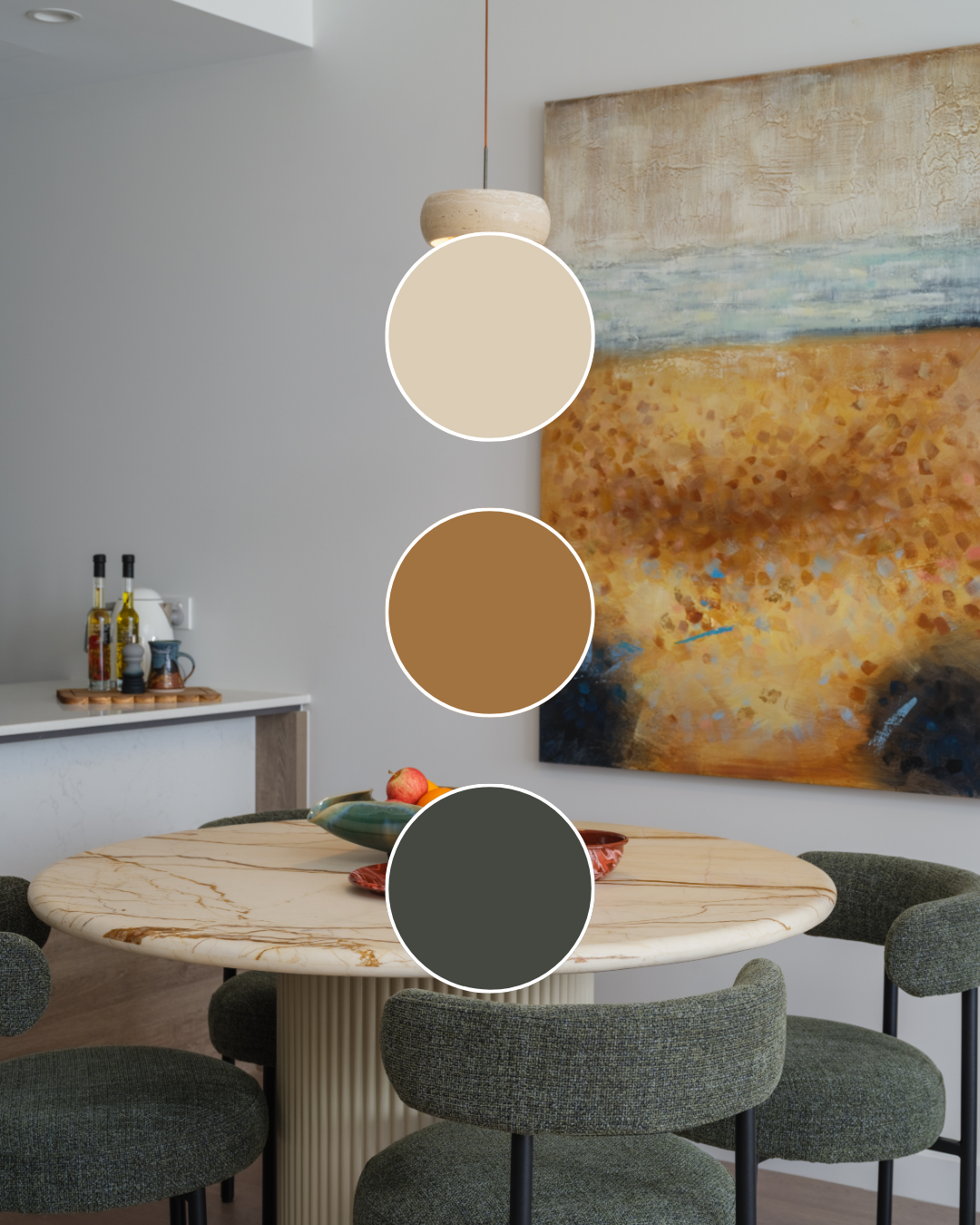
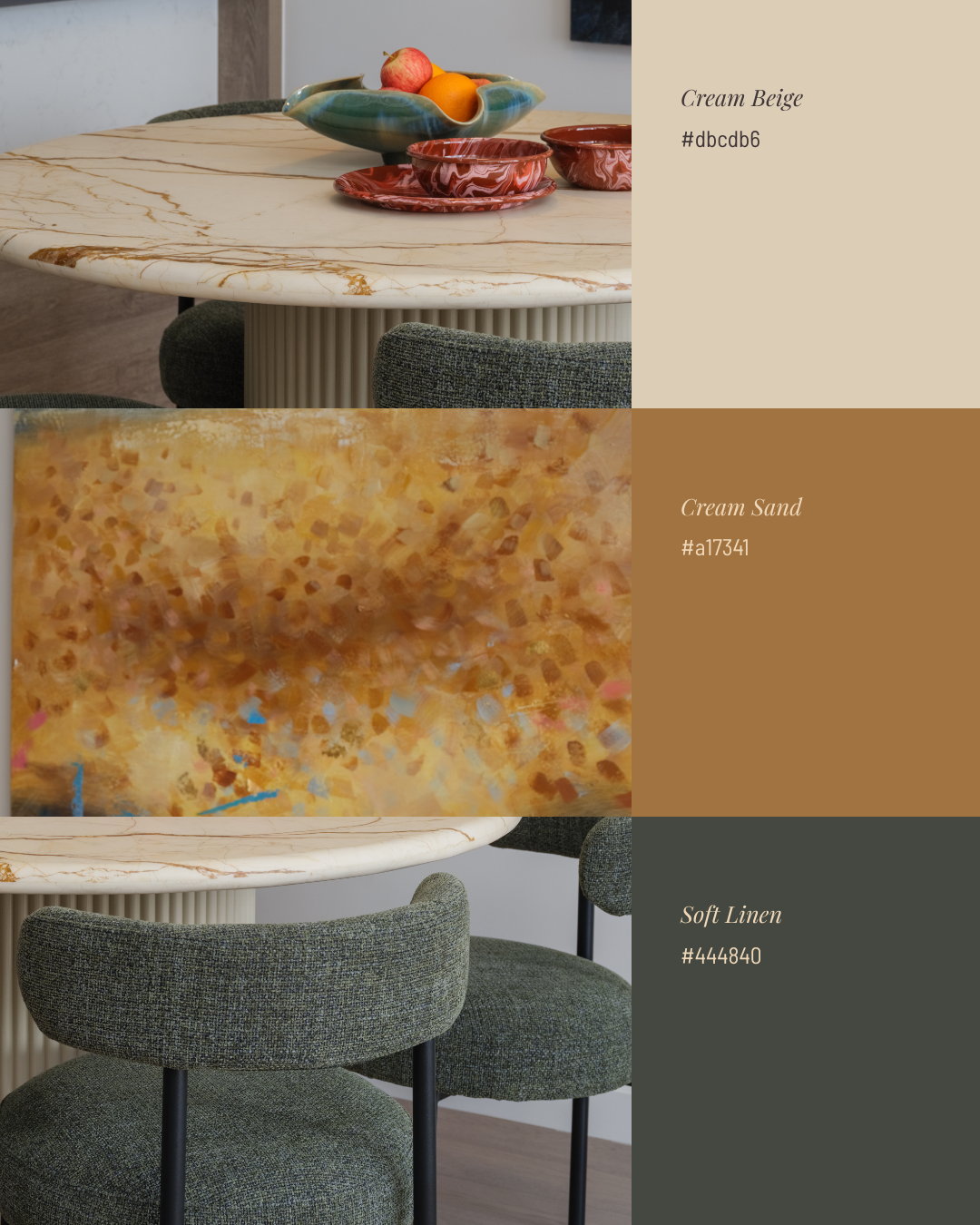
Your palette is the set of colours, tones, and materials that will run through the entire apartment. It doesn’t need to be complex — in fact, simpler is almost always better.
Start with three decisions:
Background tone. This is your walls, your floor (if you have any choice), your curtains or blinds. The background should recede — it’s not there to make a statement, it’s there to let everything else have room. Warm neutrals (warm white, warm linen, warm grey) work in most Sydney apartments. Cool greys can feel clinical without warmth from other layers.
Primary material. Pick one material that will carry the most visual weight in your space — usually the sofa, but sometimes the rug or the flooring. This material sets the register for everything else. Warm timber, natural linen, wool — these materials age well and work with a wide range of complementary choices.
One point of difference. One colour, material, or object that gives the apartment its character. This doesn’t need to be dramatic — a deep sage armchair, a terracotta ceramic, a single artwork with real presence. One point of difference is enough. More than that and the palette starts to compete with itself.
2. Anchor each room before adding anything else
Every room needs one piece that everything else responds to. In a living room, this is usually the sofa or the rug. In a bedroom, it’s the bed — specifically the headboard height and the bedlinen weight. In a dining area, it’s the table shape and scale.
Get this piece right — the right scale, the right material, the right presence — before you think about anything else. A room built around a strong anchor will feel considered even with minimal additional pieces. A room without an anchor will feel unresolved no matter how many things you add.
The most common Sydney apartment mistake: the sofa is too small. A sofa that floats in the middle of a room rather than anchoring it is the most reliable way to make a well-proportioned apartment feel vague and unconsidered. When in doubt, go slightly larger than you think you need.
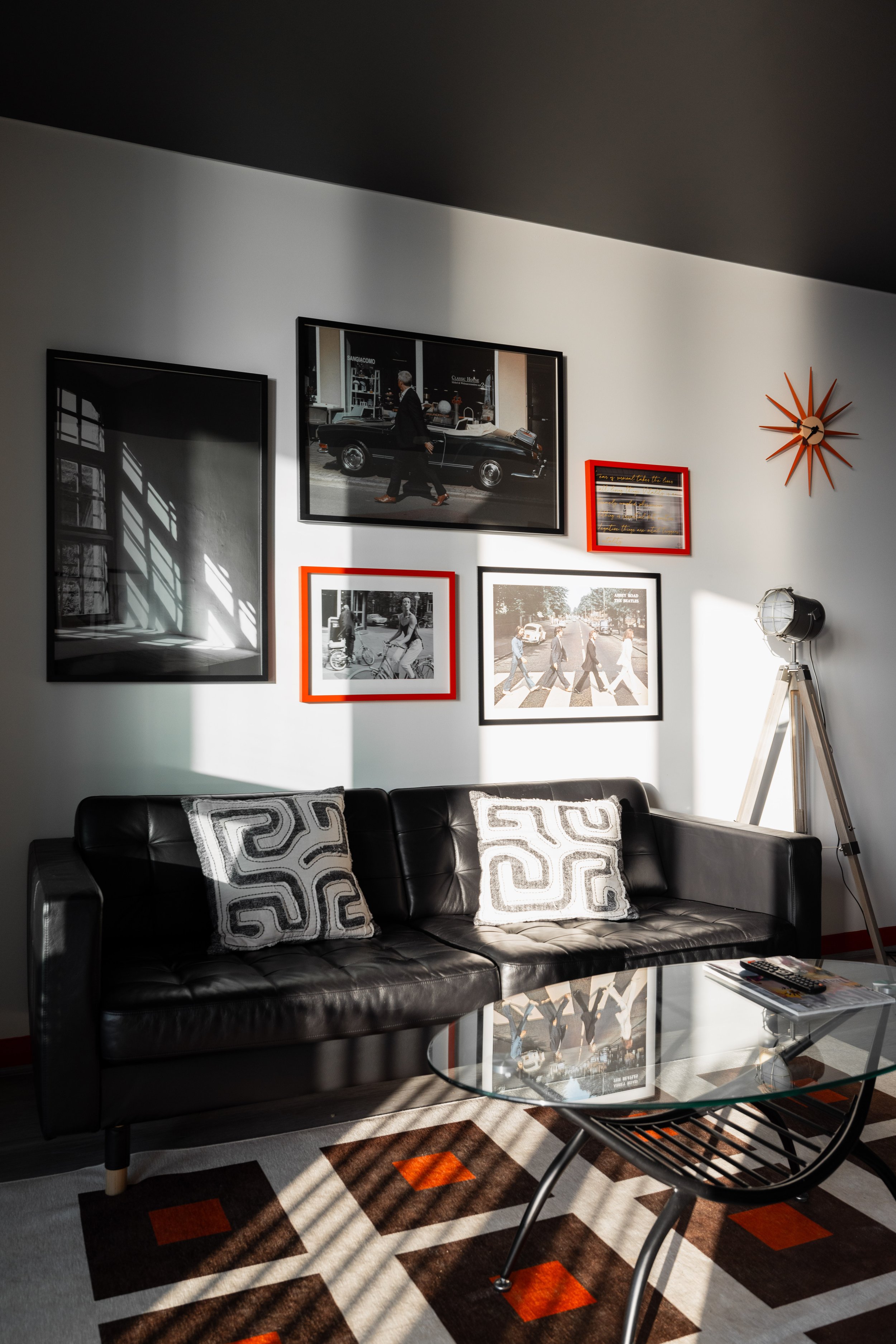
3. Rugs before objects
If you’re going to invest in one piece that transforms the feeling of a room, make it a rug — before you buy a single decorative object.
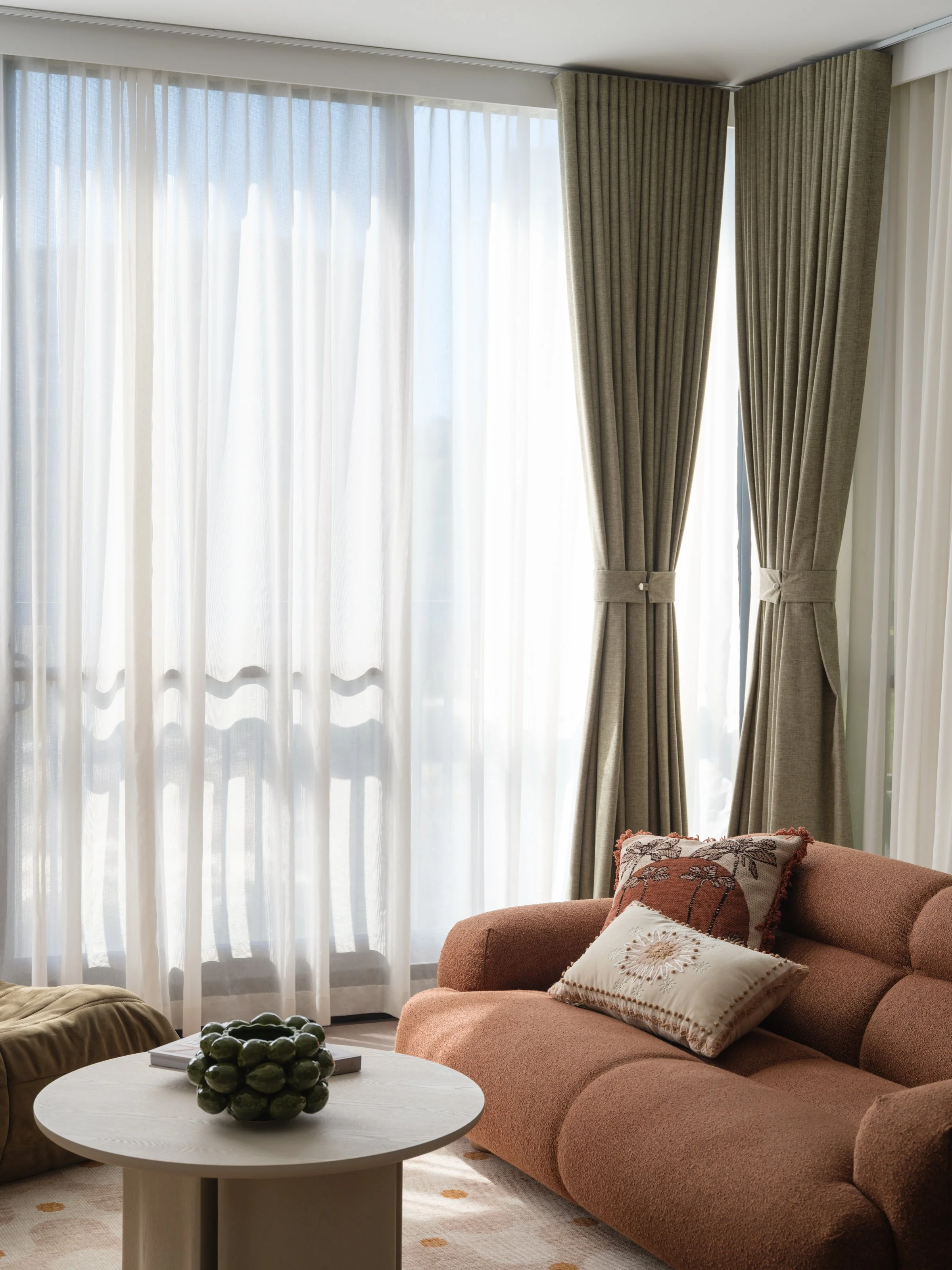
A rug does three things simultaneously: it defines the zone (which is why scale matters so much — the front legs of all seating should sit on the rug), it adds material warmth, and it grounds the furniture so the room stops feeling like pieces floating on a hard floor.
In a Sydney apartment, a wool or high-GSM rug in a warm neutral is almost always the right choice. The size rule: minimum 240×170cm for a standard living room. Most people go too small.
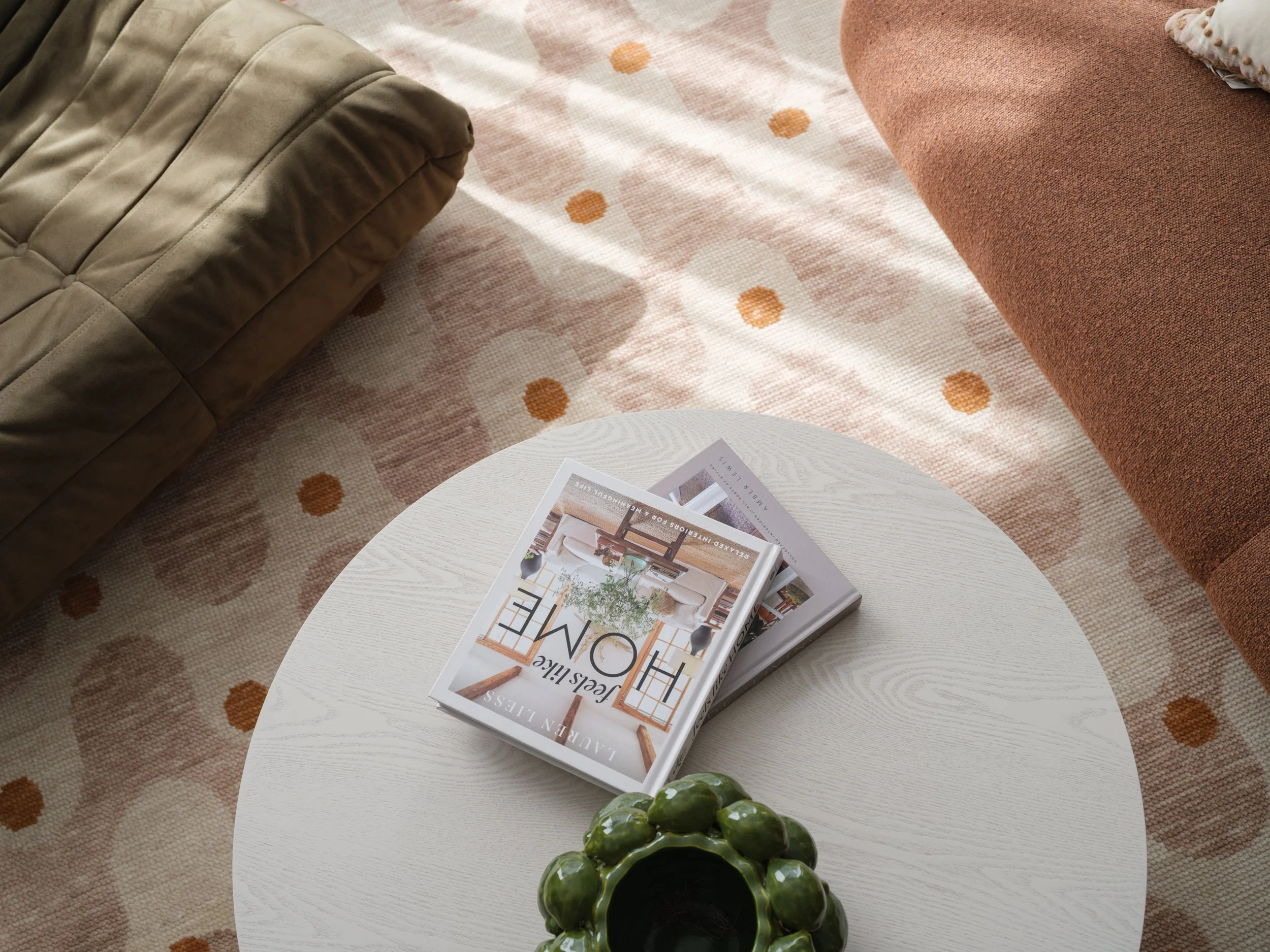
Warm Current — Styling Collection, SYP Homes
4. Lighting before soft furnishings
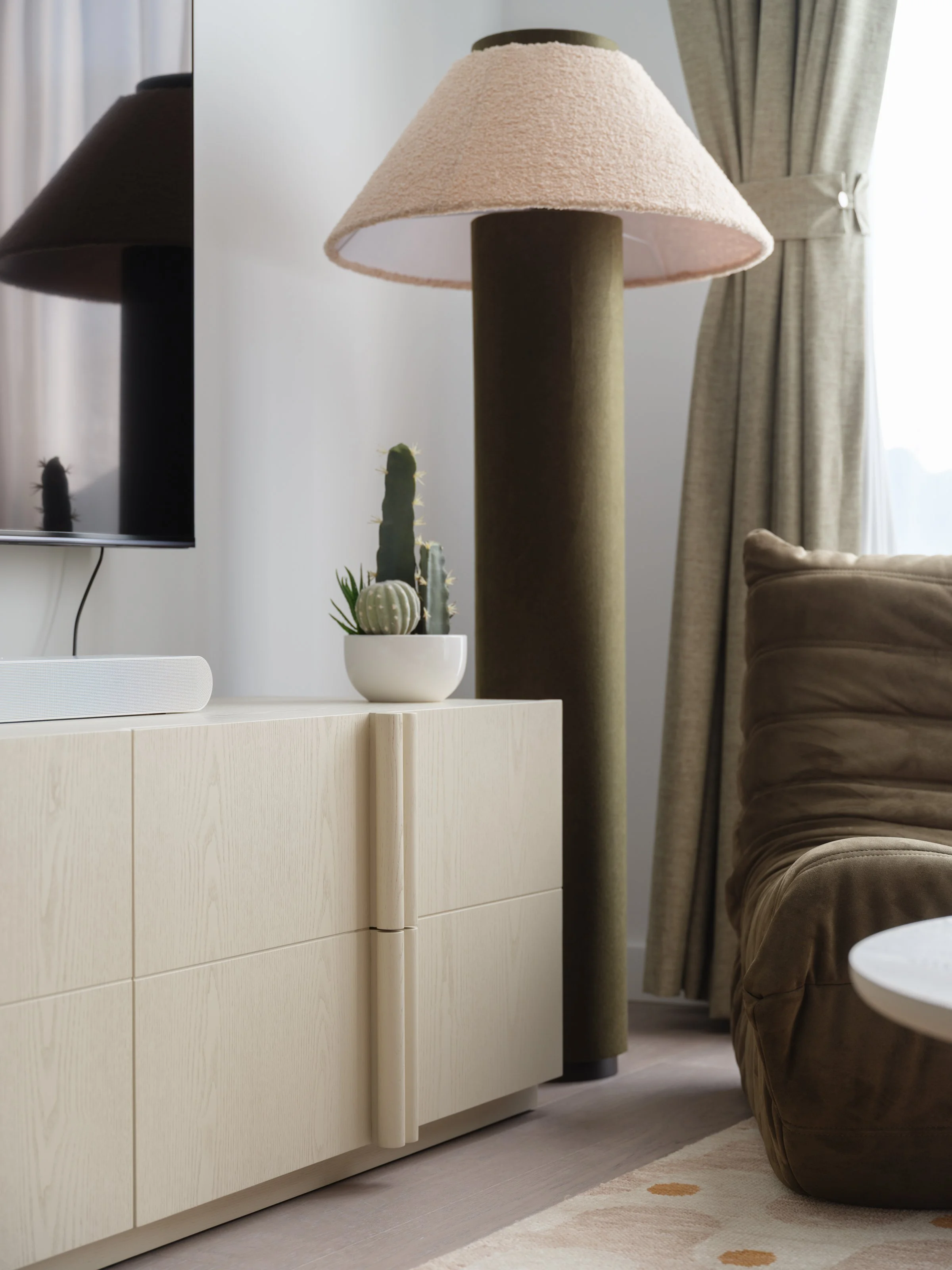
Most Sydney apartments have overhead downlights. Downlights direct light downward — they illuminate floors and surfaces while leaving walls and faces in shadow. The result is a flat, functional brightness that has no atmosphere.
Before you buy cushions, throws, or objects, add a floor lamp.
A single floor lamp (colour temperature 2700–3000K) positioned beside the primary seating area will change the quality of the room more than almost any other intervention. It shifts the visual centre from the floor upward, creates warmth in the evenings, and gives the room a layer of light that downlights can’t provide.
This is the highest return-per-dollar change available in any Sydney apartment. Budget $150–$350 and do it before anything else in the soft furnishing layer.
5. Soft furnishings: less than you think
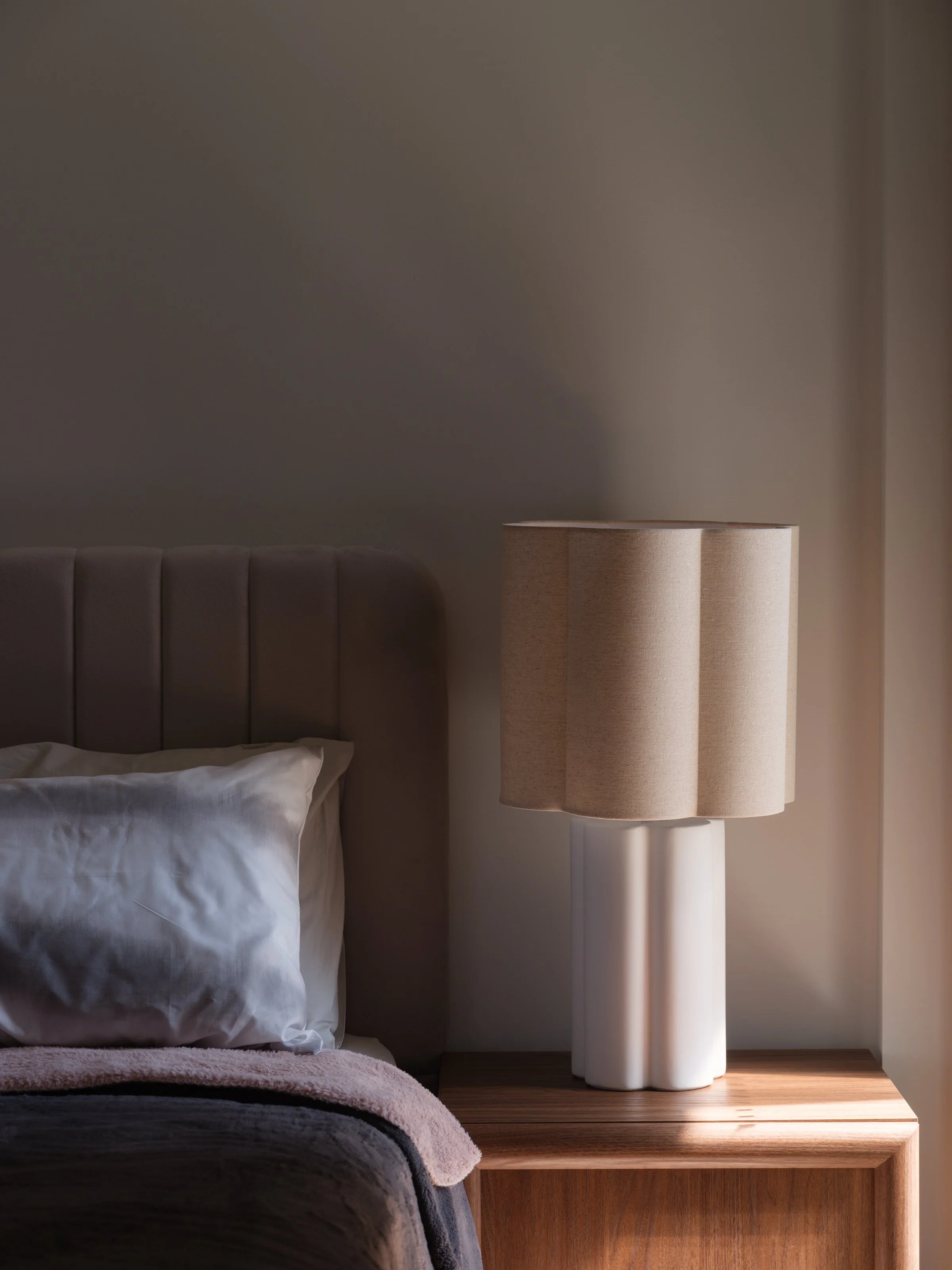
Cushions, throws, bedlinen, curtains — these are the layer where most people overspend relative to the impact they create.
The rule for soft furnishings is restraint. Three cushions on a sofa, chosen for material weight rather than pattern. Curtains that are close to the wall colour — their job is to frame the window, not to participate in the visual conversation. Bedlinen in a quality natural fibre at a weight you’d actually want to sleep under.
The soft furnishing layer should whisper, not shout. If it’s competing for attention with your anchor pieces, there’s too much of it.
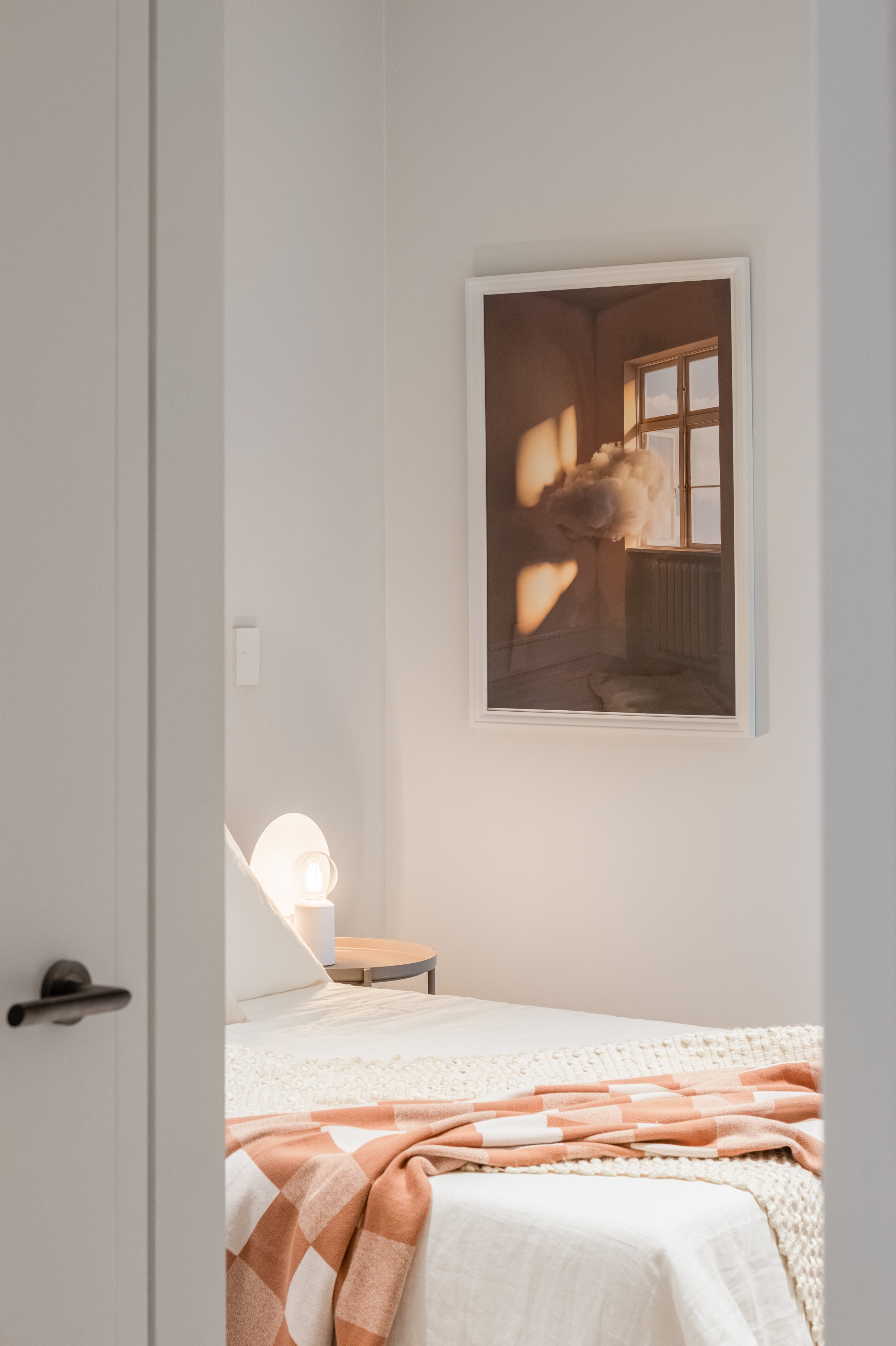
Curated Tension — Styling Collection, SYP Homes
6. Objects last — and fewer than you plan
Objects are the last thing to add and the first thing most people buy too many of.
The rule: every surface should have room to breathe. A coffee table with three objects reads as considered. A coffee table with eight reads as cluttered, regardless of how good the individual pieces are.
Start with less than you think is right. You can always add one more thing. You almost never need to.
The Specific Challenges of Sydney Apartments
Ceiling heights vary significantly. Older apartment buildings often have generous ceiling heights. New builds in areas like Rhodes, Zetland, or Olympic Park tend to be lower. Ceiling height affects how large your furniture can read — a sofa that looks right under 2.7m ceilings can dominate a room with 2.4m.
Most apartments face one direction strongly. Unlike houses with multiple aspects, apartments usually have a primary orientation. Understand yours and work with it — don’t try to create warmth in a south-facing apartment with warm-toned furniture and then be confused when it still feels cool.
Open-plan layouts need zone definition. Many Sydney apartments combine living, dining, and kitchen in a single open space. Without zone definition — primarily through rugs, lighting, and furniture placement — the space reads as one undifferentiated room. Each zone needs its own anchor and its own light source.
Rental constraints are real. If you’re renting, you’re working with walls you can’t paint, floors you can’t change, and potentially furniture you can’t drill into. This actually focuses the work: every improvement has to come from soft furnishings, lighting, rugs, and placement. These layers, done well, can transform a rental apartment more dramatically than most people expect.
Common Mistakes to Avoid
Buying everything from one store. A room furnished entirely from one retailer looks like a showroom floor — consistent, but flat. The character of a home comes from pieces that respond to each other across different sources.
Prioritising price over proportion. A well-proportioned piece at a moderate price point creates a better room than a prestige piece at the wrong scale. Proportion first, always.
Adding before editing. When a room doesn’t feel right, the instinct is to add something. Usually, the fix is to remove something. Before your next purchase, remove one thing from the space and see what happens.
Ignoring the ceiling. In a room with downlights, the ceiling is where your eye goes. It’s almost always the least interesting part of the room. A pendant light over the dining table or a statement ceiling fixture redirects attention downward — toward the living space, where it belongs.
Rushing the process. A home that’s been furnished carefully over six months will almost always look better than one furnished in a weekend. The pieces you take time to find are the ones that give a space its character. Leave the gaps — they’re better than the wrong thing.
When to Get Professional Help
Furnishing a Sydney apartment well is genuinely difficult. It requires spatial knowledge, sourcing knowledge, and an understanding of how materials and proportions work together in real rooms — not just in product photography.
Most people don’t have that knowledge, and there’s no reason they should. It’s specialist work.
If you want to furnish your apartment properly without spending months on independent research and trial-and-error purchasing, a professionally designed Styling Collection is worth considering. It brings the design thinking, the sourcing across multiple suppliers, and the procurement management together — so you arrive to a finished home rather than a collection of individual decisions.
Or if you’re not sure what your apartment needs — start by discovering your Space DNA. It takes 5 minutes and gives you a clear picture of your spatial personality, your priorities, and where to invest first.